Save Your Spot
Ignatius‑Valdis Chapter 1 lands directly to you: instead of just reading, you can now watch the story unfold with dynamic visuals and cinematic pacing that bring characters and settings to life. This opening instalment introduces Ignatius‑Valdis with sharp worldbuilding, a pulse‑quickening hook and carefully staged scenes that translate written tension into motion — voice work, scored ambience and visual direction combine to deepen emotional beats and clarify motivations. Whether you’re a longtime reader or a newcomer, the episode offers an accessible gateway into the narrative, balancing faithfulness to the source material with fresh audiovisual flourishes that make experiencing the tale onscreen as rewarding as turning the page.

Coming Soon
Limited Release
Coming Soon Limited Release
Every scene is designed to demonstrate expertise, and represent the written story-world through precise animation adaption.
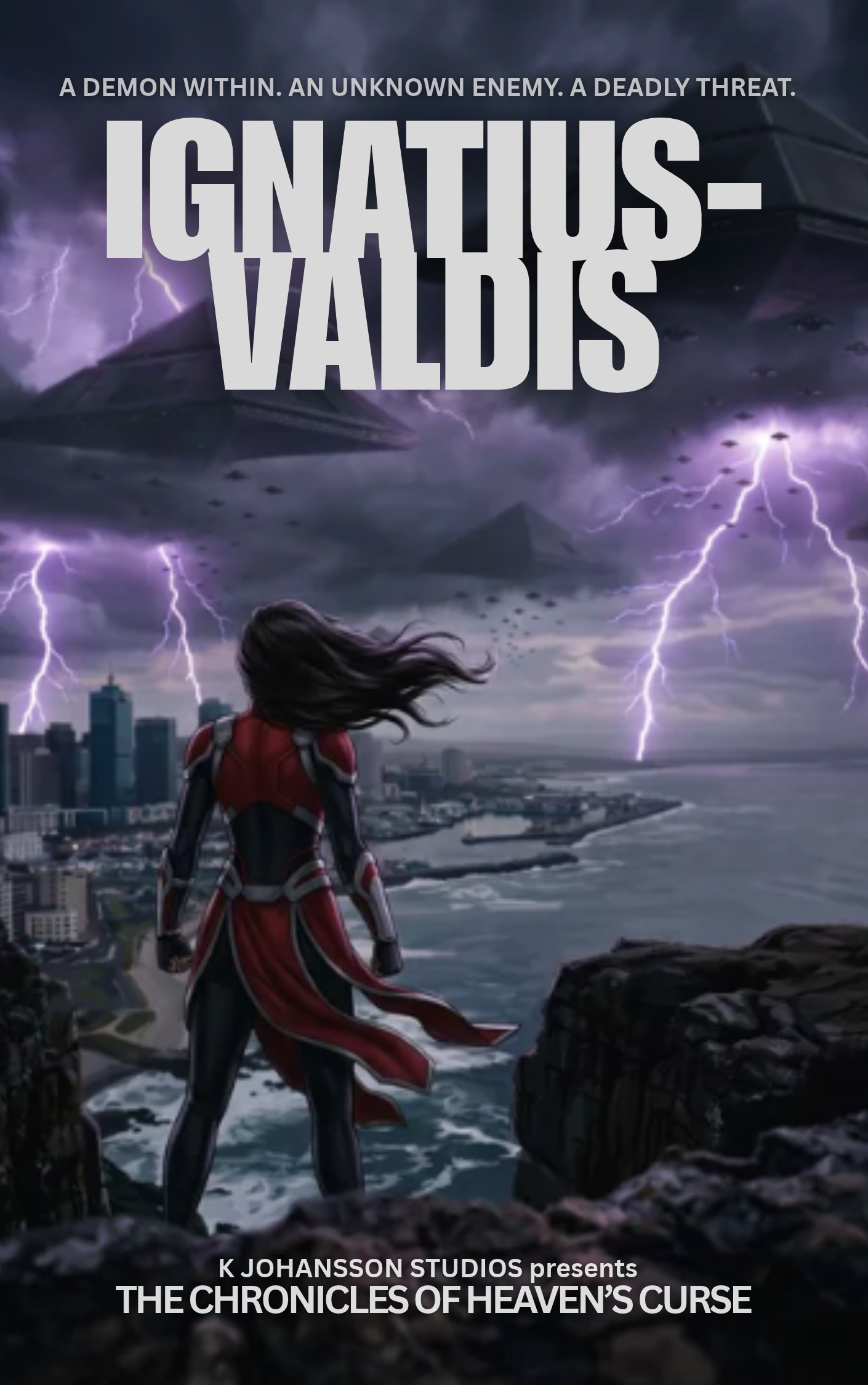
Based on the book Ignatius-Valdis: The Prequel [Part I][Chapter 1#]
Ignatius‑Valdis: Chapter 1# now lands not just on the page but on the screen: the episode adapts the opening chapter into a living sequence where narrative detail, character, and atmosphere are realized through motion, sound, and frame.
This inaugural episode introduces Ignatius‑Valdis with concentrated worldbuilding and a pulse‑quickening hook, translating the book’s tension into cinematic terms. Key features:
Visualized worldbuilding: settings from the chapter are rendered with purposeful production design and compositional choices that echo the novel’s tone — from shadowed alleys to sunlit interiors — so environments feel like active players in the story.
Staged scenes that enhance motive and conflict: careful blocking and shot selection make character intentions and power dynamics legible without overexplaining, preserving the novel’s subtlety while clarifying critical beats.
Voice work and scored ambience: layered performances and a nuanced soundtrack elevate emotional moments, supporting rather than overwhelming the dialogue and internal beats present in the text.
Cinematic pacing: editing rhythm and scene transitions recast the chapter’s suspense into momentum suited for animation, tightening some expository stretches while letting crucial revelations breathe.
Faithful adaptation with inventive flourishes: the episode remains loyal to the source material’s themes and core plot points, while adding visual metaphors, silent beats, and small expansions that deepen character detail—moments that reward both longtime readers and newcomers.
Accessibility and gateway appeal: the adaptation balances respect for the novel’s fans with clear exposition and visual shorthand that make the story easy to follow for first‑time viewers.
Additions and enhancements specific to the episode:
A brief prologue sequence that contextualizes Ignatius‑Valdis’s world through archival imagery and a voiceover, tightening the narrative hook without altering the chapter’s events.
A short visual motif—an emblem, recurring color palette, and sound cue—introduced early to tie scenes together thematically and foreshadow later conflicts.
One expanded scene showing Gothalia Ignatius‑Valdis’s private routine, adding three beats of character detail that illuminate his inner contradictions and motivate his choices in subsequent episodes.
Subtle nonverbal moments (lingering silences, reaction close‑ups) that translate internal monologue into observable performance, preserving the book’s introspection in filmic form.
Episode 1 functions as both a faithful translation and a distinct audiovisual interpretation. It preserves the chapter’s narrative core while using the tools of animation—composition, motion, voice, music, and sound design—to sharpen emotional stakes and invite viewers into Ignatius‑Valdis’s world with immediacy and cinematic clarity.